Ever looked at the rooftops in your neighbourhood and wondered how those sleek panels can power a home, especially under classic British grey skies? You’re not alone. Many UK homeowners are curious about solar technology but unsure how it actually functions in our climate.
In simple terms, solar panels convert sunlight into electricity you can use in your home, export to the grid, or store in a battery. But there’s more to the story than meets the eye. This guide will walk you through the science behind solar panels, explain the key components of a home solar system, reveal how much they cost in the UK, and show you the potential savings. By the end, you’ll understand exactly how solar panels work and whether they’re right for your home.
The Basic Science: From Sunlight to Electricity
The magic happens through something called the photovoltaic effect. Think of solar cells (which make up panels) as tiny sandwiches. When sunlight (photons) hits them, it ‘knocks loose’ electrons, creating an electrical current.
Each solar panel contains dozens of these photovoltaic cells, typically made from silicon. When photons strike the silicon, they transfer their energy to electrons, causing them to break free from their atoms. This creates a flow of electricity that can power your kettle, charge your phone, or run your washing machine.
The beauty of this process is that it’s completely silent and requires no moving parts. Unlike wind turbines or traditional generators, solar panels produce clean electricity with zero noise pollution.
The Key Components of a Home Solar System
Solar Panels (PV Modules): The Primary Energy Capturers
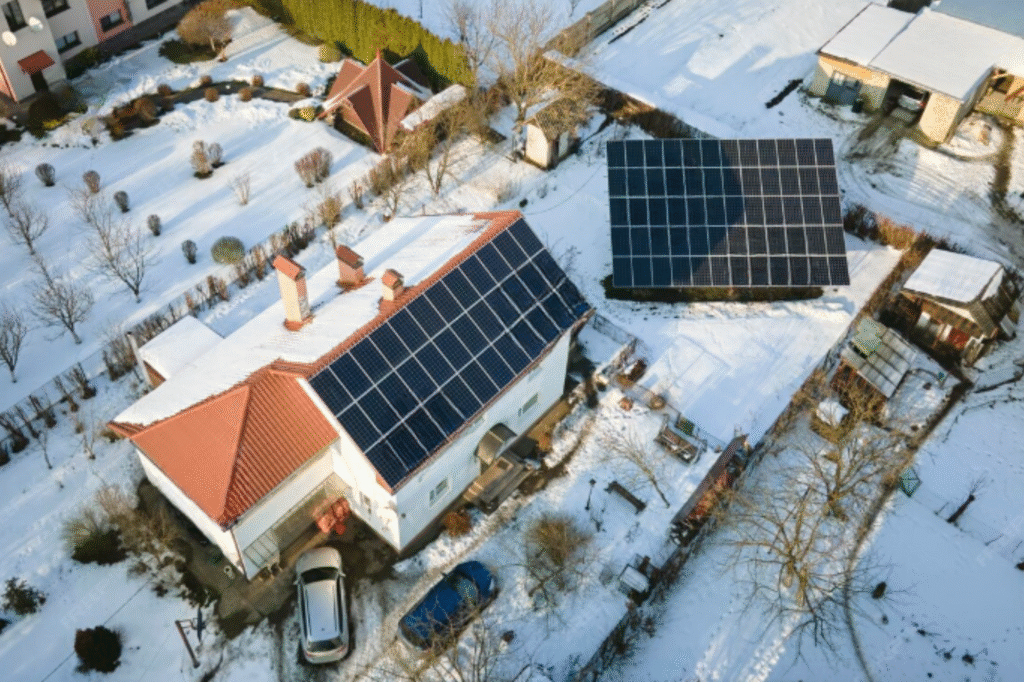
Solar panels are the most visible part of your system, mounted on your roof to capture maximum sunlight. In the UK market, you’ll encounter two main types: monocrystalline and polycrystalline panels.
Monocrystalline panels are more efficient and perform better in low-light conditions, perfect for British weather. They’re typically black and slightly more expensive. Polycrystalline panels are blue and cost less but are marginally less efficient. For UK installations, most experts recommend monocrystalline panels due to our variable weather conditions.
Inverter: The Brain of the System
Your inverter is arguably the most important component after the panels themselves. Solar panels generate Direct Current (DC) electricity, but your home runs on Alternating Current (AC). The inverter makes this crucial conversion possible.
You can choose between string inverters (one unit for the entire system) or microinverters (one per panel). String inverters are more common and cost-effective, whilst microinverters offer better performance monitoring and aren’t affected if one panel is shaded.
Mounting System & Wiring
The mounting system secures your panels to your roof and positions them at the optimal angle. In the UK, south-facing roofs with a 30-40 degree tilt work best, though east and west-facing installations can still be highly effective.
Professional wiring connects everything safely, ensuring your system meets all UK electrical regulations and building standards.
Solar Battery Storage
Whilst not essential, battery storage is increasingly popular in the UK. Batteries store excess electricity generated during the day for use in the evening when your panels aren’t producing power. This reduces your reliance on grid electricity and maximises your system’s value.
Popular UK battery brands include Tesla Powerwall, GivEnergy, and Pylon. A typical home battery stores 5-13 kWh of electricity.
Electricity Meter & Monitoring
Smart meters and monitoring systems track how much electricity your panels generate and how much you consume. This data helps you optimise your energy usage and ensures you receive proper payments for the electricity you export to the grid.
A Step-by-Step Journey of Solar Energy in Your Home
Here’s exactly what happens when your solar system springs into action:
- Sunlight hits the solar panels on your roof
- The panels generate Direct Current (DC) electricity through the photovoltaic effect
- The DC electricity travels via cables to your inverter
- The inverter converts DC into Alternating Current (AC) electricity
- AC electricity flows through your consumer unit to power your appliances
- Excess electricity is either stored in a battery (if installed) or automatically exported to the national grid
- Your smart meter records both generation and consumption data
This entire process happens instantaneously and continuously throughout daylight hours.
Do Solar Panels Work on Cloudy Days?
Absolutely! This addresses the biggest concern for UK homeowners considering solar panels. Solar panels don’t need blazing sunshine—they need daylight. Modern photovoltaic cells are remarkably effective at generating electricity even on overcast days.
Whilst efficiency does drop compared to bright, sunny conditions, your panels continue producing power throughout the day. Germany, which leads Europe in solar adoption, has a similar climate to the UK and demonstrates that solar technology thrives in less-than-perfect weather conditions.
On a typical cloudy day, your panels generate 10-25% of their peak capacity. Even on heavily overcast days, they’ll still produce some electricity. The key is that British daylight, even filtered through clouds, contains enough photons to generate usable power.
Are Solar Panels Worth It in the UK in 2024?
Upfront Costs
The cost of solar panels UK varies depending on system size and quality. For a typical home installation of 3.5-4kW (suitable for most UK households), expect to pay £5,000-£8,000 without battery storage, or £8,000-£12,000 with a battery included.
These prices represent excellent value compared to just five years ago, thanks to improved technology and increased competition among installers.
Potential Savings on Bills
Most UK homeowners save £300-£600 annually on electricity bills with solar panels. Your exact savings depend on your energy usage patterns, system size, and local sunshine levels. Homes with south-facing roofs and high daytime electricity consumption typically see the greatest savings.
The Smart Export Guarantee (SEG)
The Smart Export Guarantee pays you for the excess electricity you export to the grid. Current SEG rates range from 4p-15p per kWh, depending on your supplier. Major UK energy companies like Octopus Energy, British Gas, and EDF all offer SEG tariffs.
Energy Independence
Beyond financial benefits, solar panels protect against rising energy prices. With electricity costs remaining volatile, generating your power offers price stability and peace of mind.
Environmental Impact
A typical UK home solar panel installation prevents approximately 1.3-1.6 tonnes of CO2 emissions annually, equivalent to planting 16-20 trees each year.
Ready to Harness the Sun? Your Next Steps
The best way to determine if solar panels make sense for your home is to get quotes from certified installers. For a personalised assessment, you can contact experts in Stats Energy Solutions. A qualified installer will assess your roof, analyse your energy usage, and provide accurate projections for costs and savings.
When requesting quotes, ensure installers are MCS certified and provide detailed breakdowns including system size, equipment brands, and projected annual savings. Don’t accept the first quote; compare at least three different proposals.
Solar technology has never been more affordable or efficient. With government incentives, falling prices, and proven performance in the UK climate, there’s never been a better time to start your journey towards lower bills and cleaner energy.”